
2026-07-25 • BY D.T. Risenburg
Nocturnal Forest Navigators: How Owls, Bats, and Raccoons See in the Dark
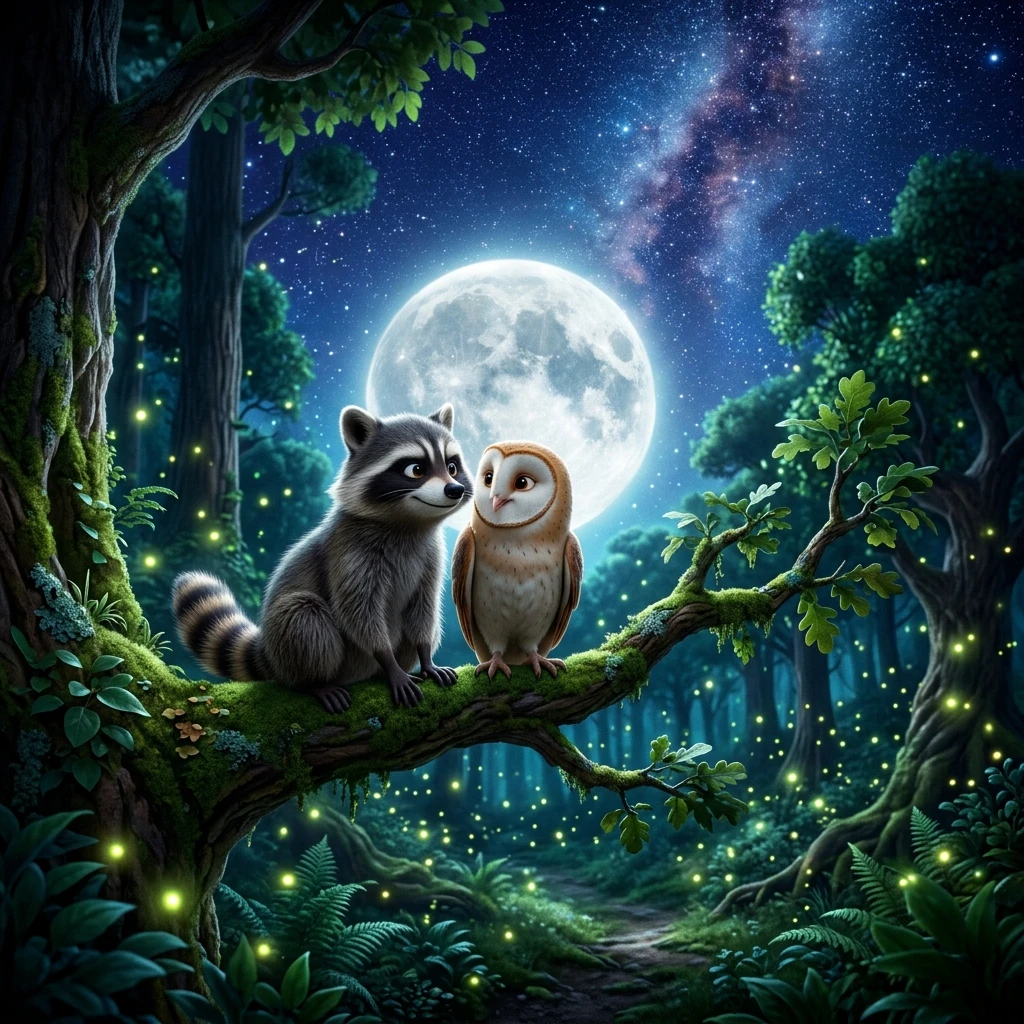
When dusk falls across woodland habitats, an intricate shift takes place. As diurnal species head to rest, nocturnal mammals, birds, and insects emerge to take over the night shift. For kids, learning about night vision and nocturnal biology is one of the most engaging entry points into optics, animal behavior, and sensory adaptation.
The Biology of Night Vision: Rods & Tapetum Lucidum
Nocturnal animals don't possess magic eyes—they rely on clever biological adaptations that maximize every available photon of starlight or ambient illumination:
- High Rod-to-Cone Ratios: Human eyes rely heavily on cones for color vision in bright light. Nocturnal animals possess retinas packed with rod cells, which trade color detail for extreme motion detection and light sensitivity in near-total darkness.
- The Tapetum Lucidum: Situated directly behind the retina, this mirror-like layer reflects unabsorbed light back through the photoreceptors a second time. This doubling effect gives species like raccoons, foxes, and deer up to six times greater low-light vision than humans.
- Tubular Owl Optics: Unlike human spherical eyes, owls have fixed, tube-shaped eyes locked in place by bony rings (sclerotic rings). This tubular structure lets them gather massive amounts of ambient light, compensating for their inability to move their eyes without turning their heads.
Tactile Sensing: Raccoon Paw Science
Raccoons (*Procyon lotor*) possess one of the most specialized tactile sensory systems in the animal kingdom. Nearly two-thirds of the sensory area in a raccoon's brain is dedicated to processing input from its front paws. Water softens the keratin layer on their paw pads, dramatically increasing nerve sensitivity—allowing them to construct detailed 3D mental images of objects underwater or inside dark tree cavities without relying on sight.
Fun Nighttime Nature Ideas for Families
- Red Light Backyard Walks: Cover a flashlight with red cellophane or paper. Red light doesn't disrupt human dark adaptation or startle nocturnal wildlife, making night walks much more productive.
- Moth Light Sheets: Hang a white bedsheet over a clothesline and shine a light onto it at night to observe the fascinating variety of moths, beetles, and nocturnal insects in your neighborhood.
- Evening Listening Sessions: Sit quietly on your porch at dusk for 10 minutes. Challenge your kids to close their eyes and count how many distinct nighttime sounds they can spot (crickets, owls, rustling leaves, rustling breeze).
Looking for more nature activities to try with your kids? Visit our Animal Footprints Guide or check out The Secret Life of Neighborhood Cats!
Want to see Dukey & Dudley in action?
Grab your copy of The Great Acorn Heist and join the adventure today.
Get the Book