
2026-05-23 • BY D.T. Risenburg
The Power of Forgiveness: What Nibbsley the Rat Can Teach Children About Second Chances
If you look at most children's stories, the line between the "good guys" and the "bad guys" is usually drawn in thick, permanent marker. The heroes are perfect, the villains are entirely bad, and once someone is labeled a troublemaker, they stay that way until the final page.
But real life is rarely that simple. People make mistakes, fall in with the wrong crowd, or act out because they are afraid or unhappy. Teaching kids how to handle these situations is tough. How do we help them protect themselves from bad behavior while still leaving the door open for forgiveness and second chances?
Nibbsley's Tough Choice
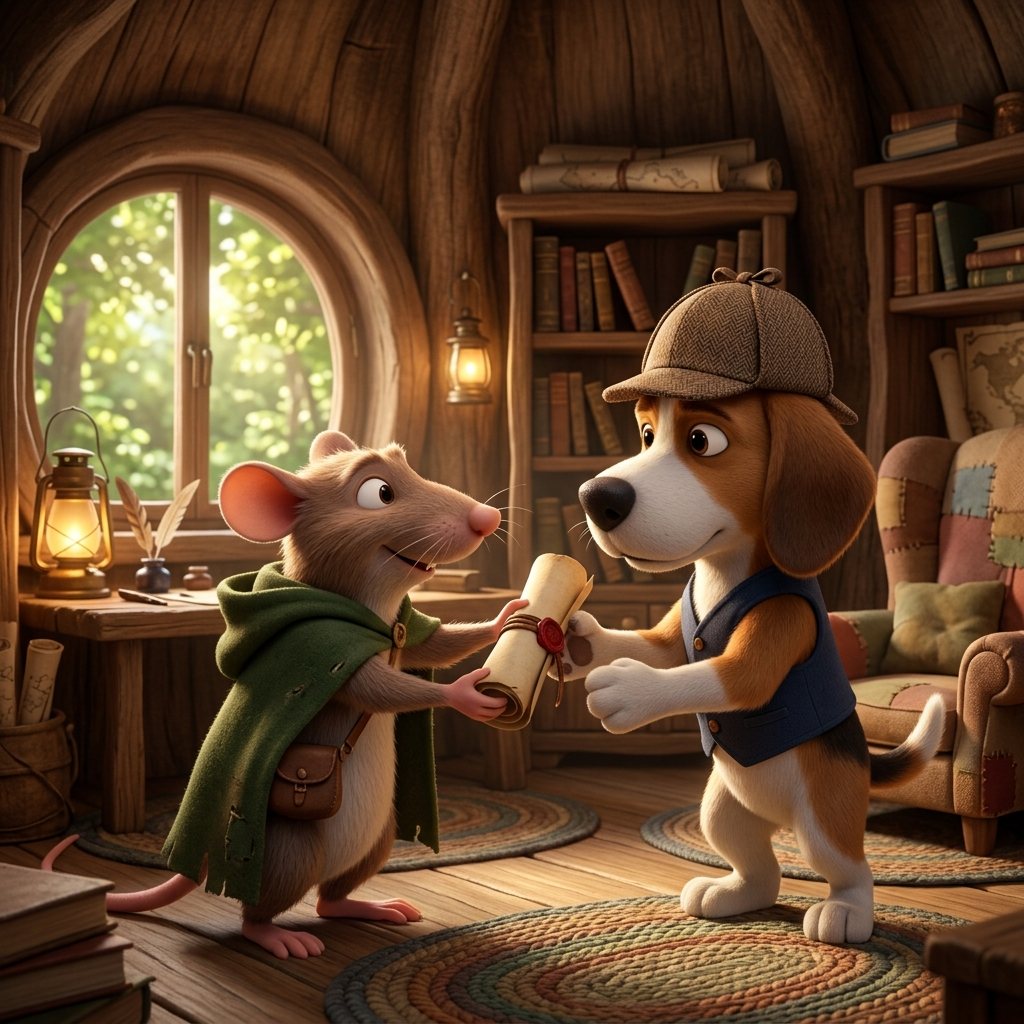
In The Great Acorn Heist, we meet a rat named Nibbsley. At the start of the story, Nibbsley isn't one of the heroes. He belongs to Ratticus's crew—the gang responsible for stealing the forest's winter food supply. Nibbsley isn't naturally mean-spirited, but he went along with the group because it felt safer than standing alone.
Over time, Nibbsley realizes that what they are doing is wrong. Seeing the other forest animals face a freezing winter without food makes him uncomfortable. He decides to make an incredibly difficult choice: he leaves the crew and reaches out to Dukey and Dudley to offer his help. (You can see him helping out in our interactive Acorn Butter Maker Machine game!)
For Dukey and Dudley, trusting Nibbsley isn't easy. He was just part of the group that caused all this trouble. But instead of shutting him out or holding a grudge, they listen to him. They decide to give him a second chance, welcoming his help to find the hidden acorn stashes.
What Nibbsley Teaches Kids About Redemption
Nibbsley's journey is a fantastic way to talk to kids about how people can change. It highlights two key lessons:
- It is never too late to do the right thing: Even if a child has made mistakes, acted like a bully, or gone along with a bad decision, they always have the power to change their mind and choose a better path.
- Redemption requires action: Nibbsley doesn't just say he's sorry. He takes action by defecting from the gang and using his inside knowledge to help the other animals recover their food. True change is shown through our choices, not just our words.
Welcoming Former Outcasts
For kids on the playground, this scenario happens all the time. A classmate who was mean yesterday might want to play today. Or a child who went along with teasing someone else might feel bad and want to make amends.
We want our kids to be smart and protect their own boundaries. But we also want them to be kind enough to recognize when someone is making a genuine effort to change. When we talk about Nibbsley with our children, we can discuss the difference between blindly trusting someone and giving them a chance to prove they want to do better.
Forgiveness doesn't mean forgetting, and it doesn't mean letting people walk all over you. It means recognizing that people are capable of growth. When we welcome someone who wants to do good, we don't just help them—we make our whole community stronger. Just like Dukey, Dudley, and Nibbsley, we find that the best solutions come when we work together, even with those we least expected to call friends.
Want to see Dukey & Dudley in action?
Grab your copy of The Great Acorn Heist and join the adventure today.
Get the Book