
2026-05-14 • BY D.T. Risenburg
How Oak Bark Park Stood Up to Ratticus: Lessons in Standing Up to Bullying
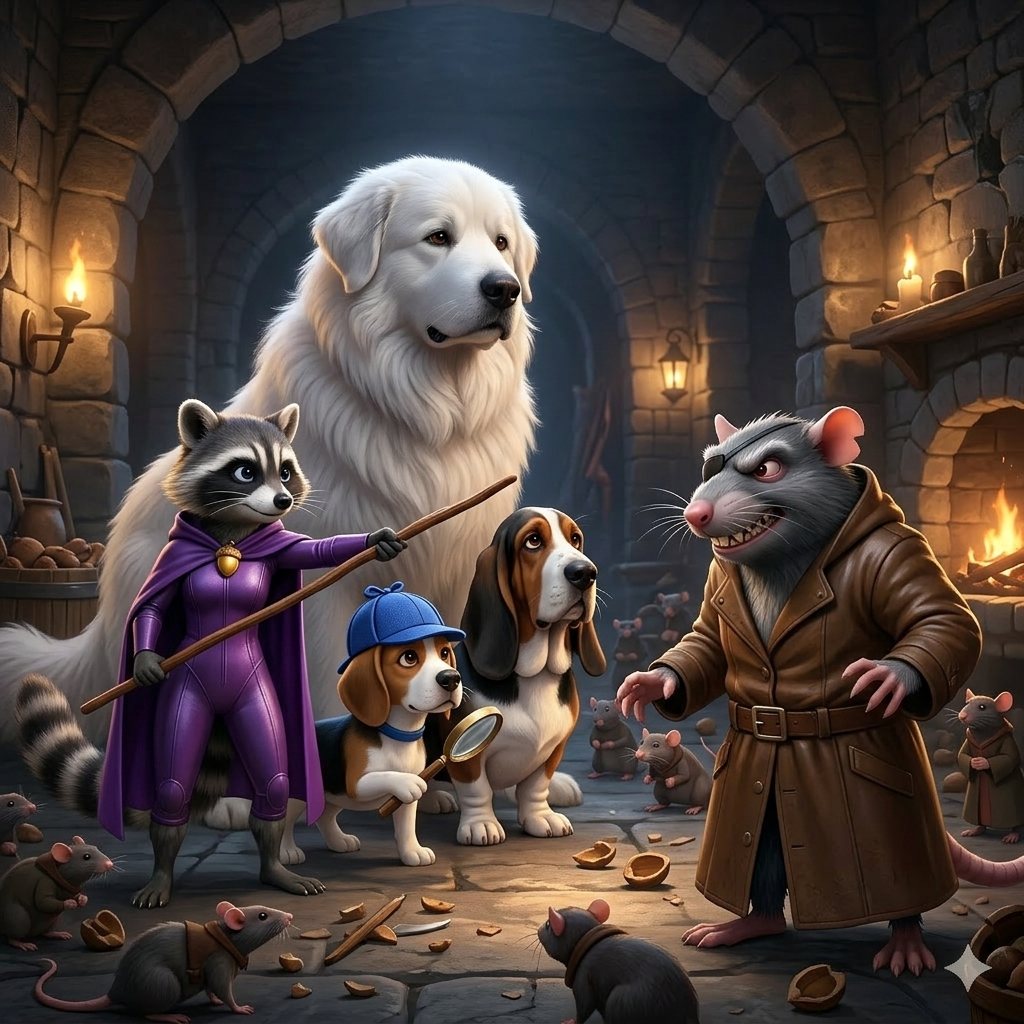
Bullying is a topic that almost every parent and educator has to address at some point. On the playground, in the classroom, or online, children frequently encounter situations where someone uses power, size, or fear to control and exclude others. It can be incredibly isolating for a child to feel like they have to face a bully all on their own.
In The Great Acorn Heist, the animals of Oak Bark Park face this exact problem. Their bully is Ratticus, a greedy, imposing rat who has taken control of the forest's winter food supply. Ratticus doesn't rule by respect; he rules by intimidation.
The story of how the animals overcome this threat offers a powerful, kid-friendly lesson in how standing together can disarm even the most intimidating bullies.
The Illusion of the Lone Tyrant
At first, Ratticus seems completely unstoppable. He has a crew of followers, and the individual squirrels, chipmunks, and birds feel far too small and weak to challenge him. This is exactly how real-life bullies operate—they count on their targets feeling isolated and powerless.
When Dukey the Beagle and Dudley the Basset Hound decide to investigate the missing acorns, they realize they cannot solve this problem by themselves. They are just two dogs, and Ratticus's influence runs deep.
Instead of trying to be solo heroes, they do something much smarter: they build a coalition. They bring together Brin the raccoon guardian, Cooper the massive Great Pyrenees guardian dog, and even Nibbsley, a reformed rat who decides he's tired of Ratticus's bullying behavior. By uniting, they change the dynamics of the entire park. (Kids can join these brave protectors by signing up for the Woodland Guardianship program!)
Strength in Numbers
When the animals finally confront Ratticus, they don't do it with anger or violence. They do it by showing up together. When Ratticus looks out, he no longer sees a few scattered, frightened animals. He sees a united front. He realizes that his power of intimidation only worked when the animals were divided. Once they stand shoulder-to-shoulder, his control vanishes.
This is a vital lesson for children. Bullying thrives on secrecy and isolation. When kids learn that they don't have to face a bully alone, it changes everything.
Key Takeaways for Kids:
- Be an Upstander, Not a Bystander: If a child sees someone else being bullied, they don't have to intervene directly if they feel unsafe. But they can stand next to the victim, show support, or go get help from an adult together.
- Speak Up: Bullies count on silence. Sharing what is happening with friends, parents, or teachers takes away the bully's secret advantage.
- Look Out for Each Other: In Oak Bark Park, Cooper the Great Pyrenees uses his large size not to bully others, but to shield the smaller animals. Kids with social influence or physical strength can use their position to look out for their peers.
Talking About Bullying at Home
Reading stories like The Great Acorn Heist opens a natural doorway for parents to check in with their kids. You can ask: "How do you think Brin felt when Ratticus took the acorns? Have you ever seen someone act like Ratticus at school? What did the other kids do?"
These questions help children process their own experiences through the safety of a story. They learn that standing up to a bully isn't about being mean back—it's about finding your community, standing up for what is right, and remembering that there is always strength in numbers.
Want to see Dukey & Dudley in action?
Grab your copy of The Great Acorn Heist and join the adventure today.
Get the Book