
2026-04-29 • BY D.T. Risenburg
Whodunit? How Mystery Books Boost Critical Thinking in Elementary Kids
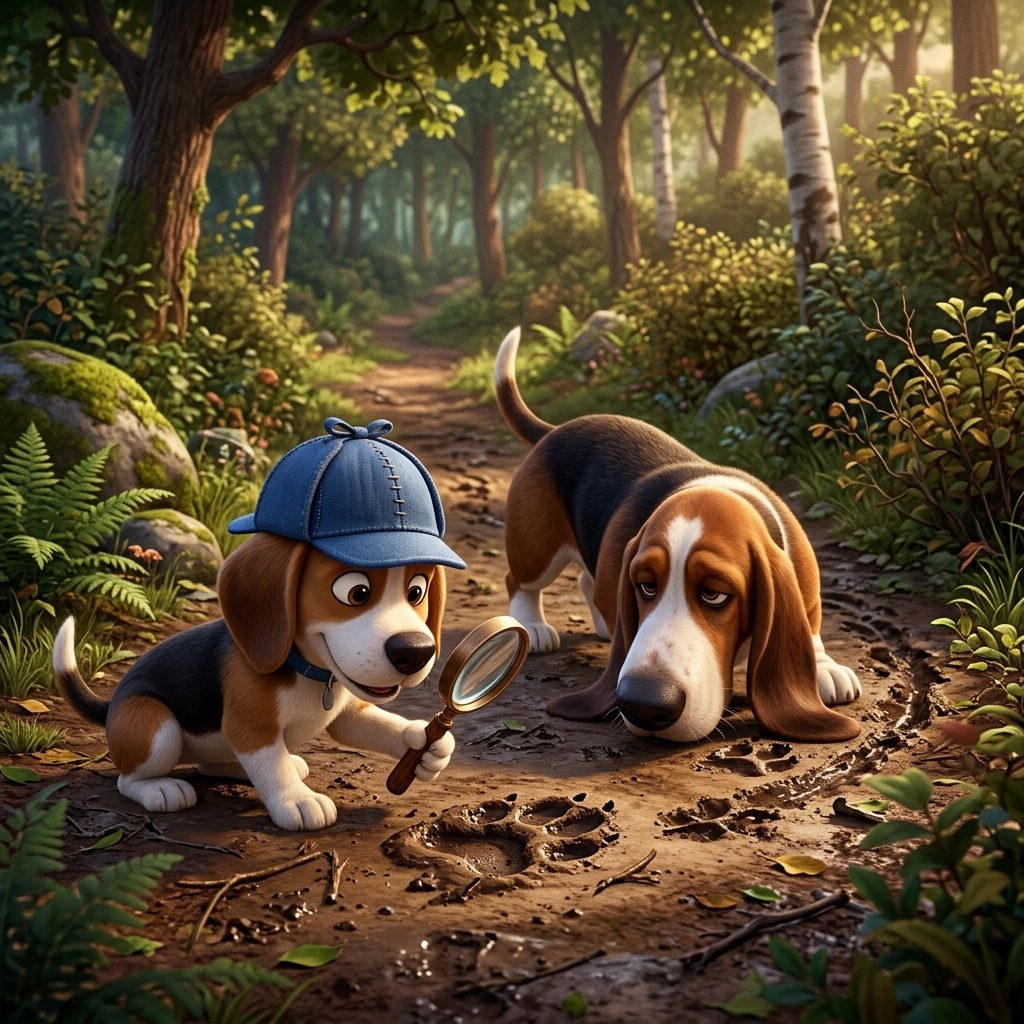
As parents and teachers, we are always on the lookout for ways to stretch our kids' minds. We buy educational games, enroll them in STEM activities, and encourage puzzles (like our collection of free kids mystery activities). But one of the most powerful tools for boosting critical thinking is sitting right on their bookshelf: a good old-fashioned mystery story.
Mystery books do something unique. Instead of just presenting a story for kids to observe, they invite them to participate. They turn reading from a passive activity into an active puzzle-solving game.
In The Great Acorn Heist, children join Dukey the Beagle and Dudley the Basset Hound as they track down the missing winter food supply. Along the way, the story models the exact steps of logical thinking, observation, and analysis.
Reading as an Active Investigation
When a child reads a mystery, their brain goes to work in several key ways:
Observation and Detail: In our book, Dukey searches for physical clues, analyzing weird claw prints and noting the smell of an old gym sock. Kids learn to pay attention to details in the illustrations and text, realizing that small, seemingly unimportant things might turn out to be crucial parts of the puzzle.
Making Predictions: As clues accumulate, kids naturally start making guesses. Who took the acorns? Where are they hidden? Why did they do it? When a child makes a prediction and reads on to see if they were right, they are practicing the scientific method: forming a hypothesis, gathering data, and testing it.
Cause and Effect: Mysteries are built on logic. Children follow the chain of events: a scent trail leads to a specific bush, which reveals a dropped item, which points to a suspect. Understanding these cause-and-effect relationships is a core foundation of analytical thinking.
How to Boost Critical Thinking While Reading Together
You can turn reading time into an interactive brain-boosting game with a few simple techniques:
- Stop and examine the clues: When Dukey sketches a clue in his notebook, pause reading. Ask your child: "What do you think this drawing means? What does it tell us about where the acorns might be?"
- Ask for predictions: Before you turn the page to reveal the culprit or the next location, ask: "Based on what Dudley sniffed out, what do you think they will find in the next clearing?"
- Compare character styles: Discuss how Dukey uses logic and drawings while Dudley uses his sense of smell. Ask: "Which way would you want to solve a mystery? Would you look for footprints or try to smell them?"
Building Thinkers, One Clue at a Time
By engaging children's natural curiosity, mystery books like The Great Acorn Heist make logic and critical thinking feel like play. Kids learn to look beneath the surface of things, ask questions, and trust their own analytical brains.
Those are skills that will help them long after the mystery of Oak Bark Park is solved—in school, in relationships, and in navigating the complex world around them.
Want to see Dukey & Dudley in action?
Grab your copy of The Great Acorn Heist and join the adventure today.
Get the Book