
2026-04-24 • BY D.T. Risenburg
Exploring the 'Great Acorn Heist': Fun Forest Facts for Kids
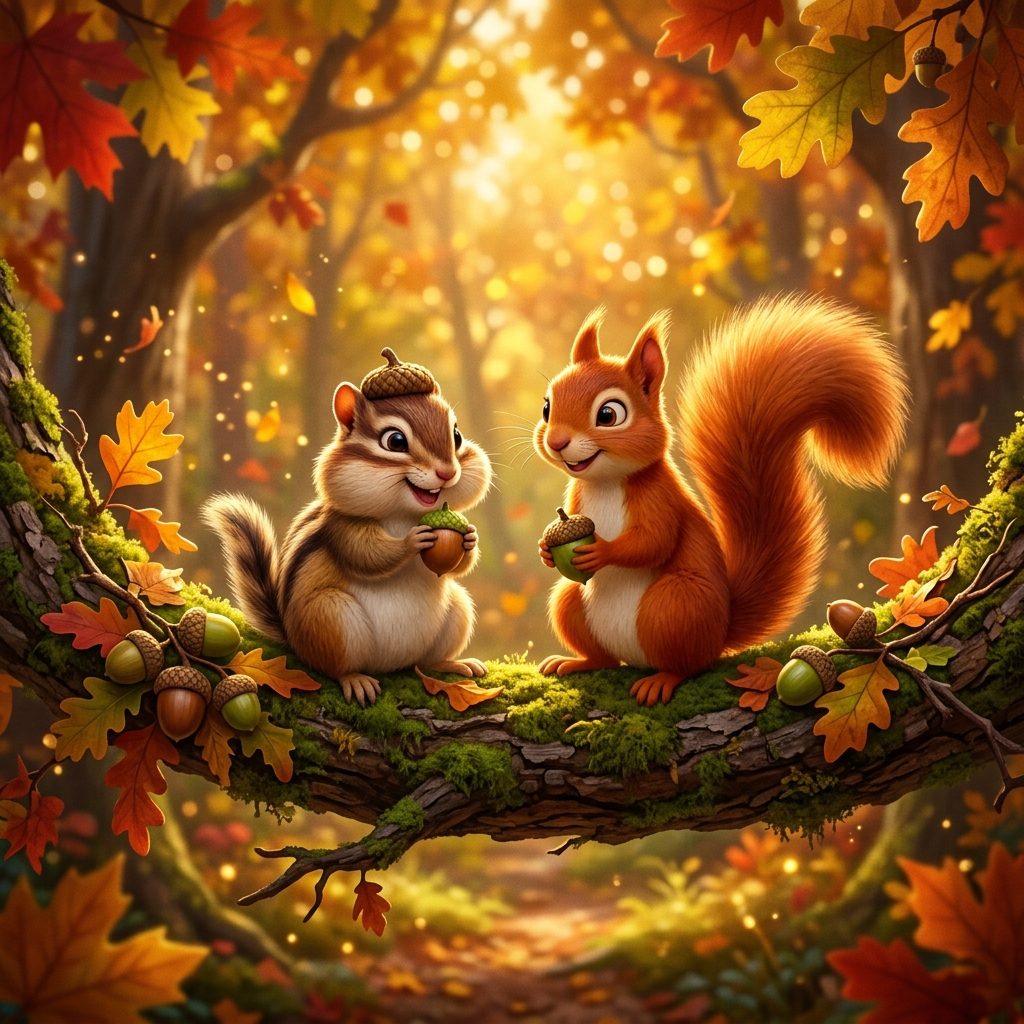
In The Great Acorn Heist, the plot revolves around a very serious problem: the animals' winter food supply has been stolen. In the story, the chipmunks, squirrels, and birds are desperate to get their acorns back before the cold weather sets in.
While it makes for an exciting adventure, this scenario is actually based on real science. In the wild, hoarding and protecting food for the winter is a matter of life and death for woodland creatures.
Let's take a look at the fascinating, real-world biology behind food hoarding, and how actual forest animals prepare for the freezing winter months. (You can also search for these woodland terms in our fun word search activity!)
Larder Hoarding vs. Scatter Hoarding
Woodland animals generally use one of two main strategies to store their food for the winter:
Larder Hoarders (The Chipmunk Strategy):Larder hoarding means storing all your food in one single, centralized location. Chipmunks are classic larder hoarders. They build extensive underground burrows with dedicated "pantry" chambers. Throughout the autumn, they fill these chambers with nuts, seeds, and acorns.
This strategy keeps their food safe in one place, but it has a massive risk: if another animal finds their burrow, the chipmunk loses their entire winter supply at once. This is exactly the kind of heist that Ratticus pulls off in Oak Bark Park!
Scatter Hoarders (The Squirrel Strategy):Scatter hoarding means burying small stashes of food in dozens or hundreds of different locations across the forest. Gray squirrels are famous scatter hoarders. They bury individual acorns in shallow holes in the dirt, covering them with leaves.
By spreading their food around, squirrels minimize the risk of losing everything to a thief. But this strategy has a different challenge: they have to remember where they buried it all! Squirrels use their incredible spatial memory and sense of smell to find their stashes under the snow. Interestingly, they don't find all of them—and the forgotten acorns often grow into new oak trees!
Fun Forest Facts to Share with Kids
Here are some fun, educational facts about real woodland animals that you can share with your kids:
- Super-Sized Cheeks: A chipmunk's cheek pouches can stretch to be as large as their entire head! This allows them to carry up to six acorns at a time back to their burrow pantry.
- Oak Tree Planting: Because squirrels forget up to 74% of the nuts they bury, they are actually the primary planters of oak forests. Without squirrels, we would have far fewer trees!
- Food Sorting: Squirrels are incredibly organized. They will sort their nuts by type, size, and even nutritional value before burying them, ensuring they eat the ones that spoil first.
- Raccoon Cleverness: In our story, Ratticus has raccoon helpers. In the real world, raccoons are exceptionally clever problem solvers. Their front paws are highly sensitive and act almost like human hands, allowing them to open latches, jars, and garbage cans with ease.
Connecting Science and Stories
Reading stories that connect with real-world nature is a fantastic way to encourage a child's interest in biology and the environment. The next time you are walking in the woods, look around for fallen oak trees, dig holes, or watch a squirrel running across a branch.
Ask your child: "Do you think that squirrel is a scatter hoarder or a larder hoarder? Where do you think they are hiding their acorns?" It turns a simple walk in the park into a fun, real-world science adventure!
Want to see Dukey & Dudley in action?
Grab your copy of The Great Acorn Heist and join the adventure today.
Get the Book