
2026-09-02 • BY D.T. Risenburg
Navigating the School Day: Friendship, Focus, and Standing Tall with the Woodland Guardians
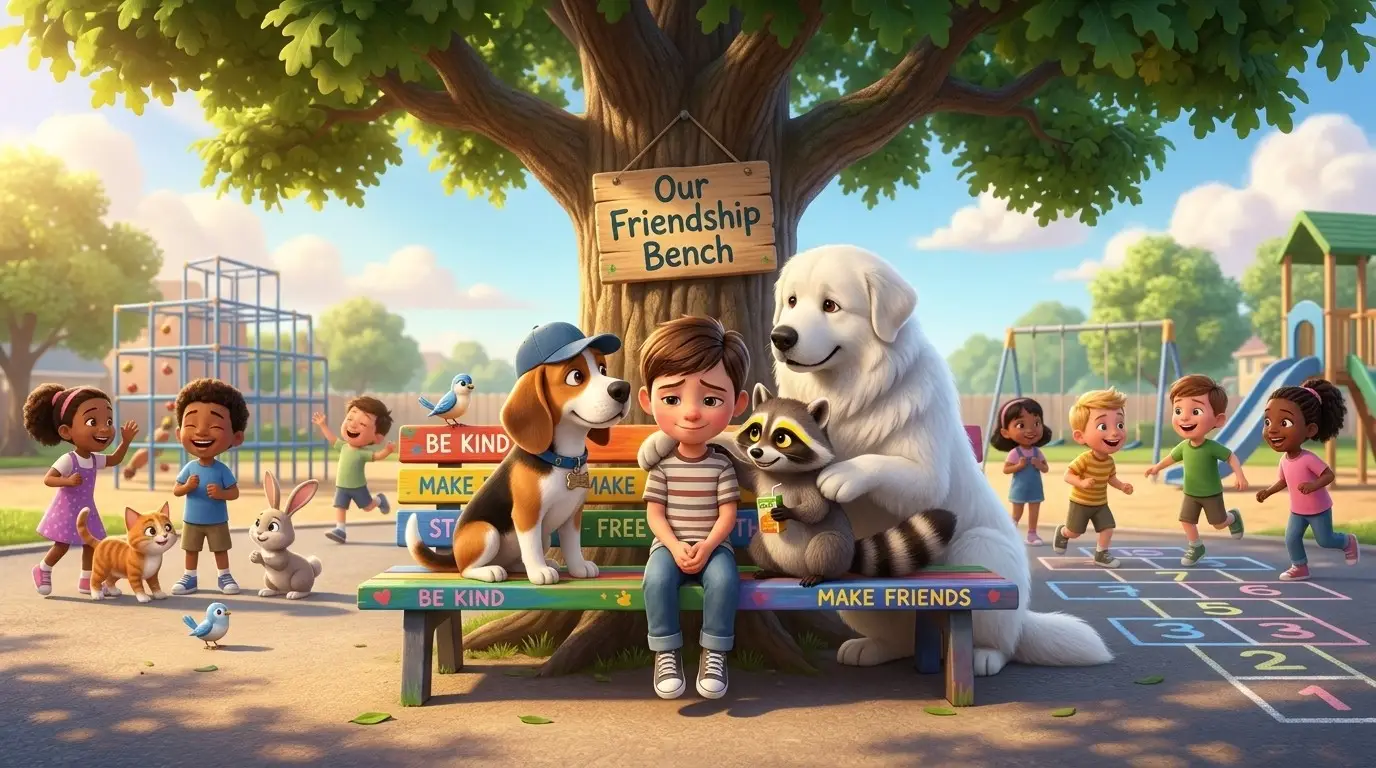
School days can be a super fun adventure—like being part of a real-life superhero team! Here is how Cooper, Brin, and Dukey make every school day awesome! 🏫🐾✨

Cooper's Recess Superpower: Inclusion!
Cooper is giant and fluffy, but his favorite thing in the world is being a gentle friend. If you see someone standing on the playground alone, walk up and ask: "Want to play four-square with us?" That's what a real Guardian does!
⚡ 3 Ways to Be a School Superhero:
- 1. Listening Ears Activated: When your teacher or friend is talking, imagine putting your secret detective headphones on to catch every clue!
- 2. Stand Tall Like Brin: If someone says something mean or unfair, stand straight, look at them calmly, and say: "Stop, that's not nice." Then find a teacher or friend.
- 3. The 5-Second High-Five: Celebrate your classmates when they solve a tough math problem or draw an awesome picture!

Brin's Brave Voice
Brin the raccoon is brave and smart. She knows that speaking up with kindness is the best way to solve any playground mystery!
Ready for lunchtime? Head over to Dukey's School Lunch Kitchen to see what delicious brain-power treats we're cooking up!
The elementary school day is a bustling, sensory-rich environment where young children must balance cognitive focus with complex social navigation. Between cafeteria lunch tables, fast-paced recess games, group projects, and teacher expectations, kids encounter moments of peer pressure, social misunderstanding, and emotional fatigue.
In Dukey & Dudley: And the Great Acorn Heist, the forest creatures demonstrate that true strength isn't about being the loudest voice or having the biggest paws—it is rooted in empathy, collaborative listening, and standing up to protect one another. Here are actionable principles to help children cultivate genuine friendships, practice classroom focus, and stand tall with integrity.
The Playground Friendship Bench
Cooper is the gentle giant of Oak Bark Park who always watches out for the smaller creatures. Teach your child the "Upstander" habit: if they notice a classmate sitting alone on a bench or looking hesitant during four-square, encourage them to be the friendly leader who calls out, "Hey, do you want to join our team?" A single inclusive gesture can transform a lonely child's entire school year.
1. The Art of Active Listening in the Classroom
In an era of rapid digital stimulation, sustained auditory attention in the classroom requires deliberate practice. Children often listen merely to respond or get distracted by neighboring chatter.
Foster active listening skills at home during family conversations:
- Eye Contact & Body Direction: Encourage facing the speaker with hands relaxed on the desk.
- The 3-Second Pause Rule: Train children to count to three silently after a teacher or peer finishes speaking before raising their hand or answering. This reduces impulsive interruptions and gives the brain time to synthesize instructions.
- Echoing Back: Practice summarizing: "So what the teacher is asking us to do first is write our name and the date, right?"
Standing Up to Teasing & Exclusion
When Ratticus the bully rat tries to intimidate the woodland animals, Brin the raccoon doesn't strike back with insults or anger; she stands tall, speaks with calm authority, and rallies her community. Teach your child the "Clear Voice" technique: look a teaser in the eye, stand straight, and say firmly: "That's not cool. We don't treat friends that way." Calm firmness defuses bullying far more effectively than tears or retaliation.
2. Navigating Recess Conflicts with the "Reset Protocol"
Most elementary behavioral friction happens during unstructured recess time. Disagreements over soccer boundaries, tag rules, or who gets the swing next can quickly escalate into tears.
🛡️ The 3-Step Playground Reset:
- Step Back (Stop the Heat): Put physical space between yourself and the argument for 10 seconds.
- Use 'I Feel' Sentences: Instead of shouting "You cheated!", practice saying: "I felt frustrated when the rules changed halfway through the round."
- Rock-Paper-Scissors Compromise: Normalize quick game-arbitration rituals. A quick round of rock-paper-scissors keeps the fun rolling without losing 15 minutes of precious outdoor play.

Look for the Clues of Kindness
Dukey knows that good detective work is all about noticing the little details! Encourage your child to spot quiet acts of kindness throughout their day—someone picking up dropped markers, sharing a jump rope, or cheering on a teammate. Celebrating these moments helps kids become empathetic, mindful classmates.
Refueling at Lunchtime
A stressful morning is quickly smoothed over by a delicious, energizing lunch. Discover packable snack ideas and colorful bento boxes in Dukey's Nutritious and Delicious School Lunch Kitchen!
Explore More Woodland Adventures!
Join Dukey & Dudley on their quest, test your skills in the games room, or print mystery activity packs!