
2026-09-05 • BY D.T. Risenburg
Cracking the Homework Mystery: Detective Habits That Turn Frustration into Daily Study Success
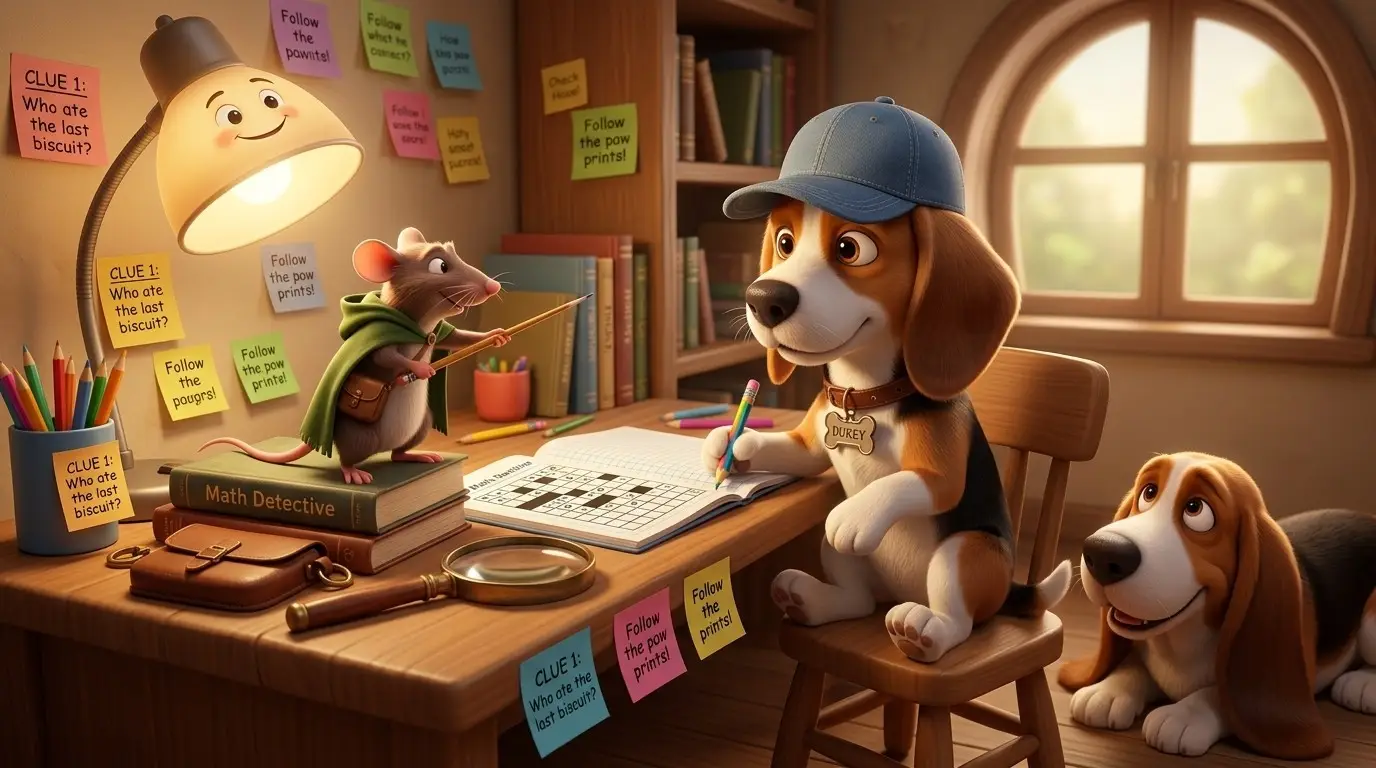
Staring at a big pile of homework feeling like a grumpy bear? Grab your detective magnifying glass—we are turning homework into a secret mystery case! 🔍📝✨

Dukey's Secret Clue Trick
Don't look at all 20 math problems at once! Cover the bottom half of the paper with a folder so you only see 2 problems at a time. Knock them out one by one like a master sleuth!
🕵️ 3 Secret Detective Study Habits:
- 1. Beat the 15-Minute Timer: Challenge yourself or a sibling to a 15-minute speed case. Can you finish your spelling list before the buzzer dings?
- 2. Mistakes Are Just Clues: Did you get a wrong answer? High five! That clue just taught you what doesn't work, bringing you one step closer to the right answer!
- 3. The Dudley Stretch: After finishing a worksheet, stretch your arms high in the air, shake your paws out, and take a quick victory lap around the kitchen table!

Nibbsley's Engineer Mindset
Nibbsley says: "When an acorn machine gets jammed, you don't kick it—you look for the loose gear!" Take a deep breath, look for the missing piece, and solve it!
Time for a delicious study break? Hop into Dukey's School Lunch Kitchen for power bites and crunchy snack recipes!
For millions of families, the after-school hours bring a familiar, exhausting battleground: the dining table homework stand-off. When a tired child faces a stack of math worksheets, spelling lists, or reading logs after seven hours of classroom sensory load, tears, stalling, and frustration frequently erupt.
In Dukey & Dudley: And the Great Acorn Heist, our detective duo never solves a complicated case in a single giant leap. When the forest's entire winter harvest vanished, Dukey didn't panic; he created a case map, identified individual paw prints, and broke the monumental mystery down into manageable, solvable clues. By treating homework not as a tedious chore, but as an interactive detective investigation, parents can transform evening resistance into steady, self-directed confidence.
The "Clue Chunking" Strategy
When a child looks at a 20-problem worksheet, cognitive overwhelm kicks in. Dukey uses "Clue Chunking": take a sheet of blank construction paper and slide it down the page so only 3 or 4 problems are visible at a time. The brain processes three problems as an easy, immediate target rather than a mountain of impossible labor.
1. Engineering the "Investigation Station"
Environmental cues heavily dictate executive function. Doing homework in front of a blaring TV, on an unmade bed, or amidst kitchen dinner prep scatters working memory.
Set up an intentional, low-distraction "Investigation Station" with your child:
- Physical Boundaries: A clear, uncluttered table surface with good task lighting.
- Tool Caddy: Keep sharpened pencils, erasers, rulers, and sticky notes in a portable bin so they don't get up 12 times looking for supplies.
- Digital Quarantine: Tablets and phones stay in another room unless strictly required for a school portal.
The 15-Minute Focus Sprint (Pomodoro)
Nibbsley the rat knows that machines run best in tuned cycles! Set a fun visual sand timer or analog kitchen clock for 15 minutes. Tell your student: "We are doing 15 minutes of laser detective focus on spelling. When the buzzer rings, you get a 5-minute movement break, no matter what!" Knowing that work has a guaranteed, concrete end-time eliminates dawdling.
2. Reframing Mistakes as "Clues, Not Failures"
Perfectionism is a primary root of homework meltdowns. When a child erases a hole through their paper or crumbles their worksheet in tears, they interpret an incorrect answer as a personal failure of intelligence.
🔍 How to Foster a Detective Growth Mindset:
- Celebrate Wrong Turns: Say, "Aha! That answer showed us where the formula broke down! In mystery work, finding a dead end is how you discover the real path."
- Praise the Strategy, Not the Score: Replace "You are so smart" with "I noticed how you re-read the word problem twice to catch the hidden numbers—that was brilliant detective thinking!"
- The 'Three Before Me' Rule: Before asking a parent for the answer, the student must: 1. Re-read the instructions out loud, 2. Check an example problem, 3. Make their best guess. This builds critical problem-solving stamina.

The 5-Minute "Hound Stretch" Break
When frustration bubbles up, sit back like Dudley! Do 10 jumping jacks, grab a cold glass of water, or roll a ball for the family dog. Physical movement pumps oxygenated blood back to the frontal cortex, clearing mental fatigue in minutes.
Study Fuel for Busy Brains
Brainwork requires real glucose and protein! Treat your hard-working detective to homemade snacks from Dukey's Nutritious and Delicious School Lunch Kitchen to keep energy humming all afternoon.
Explore More Woodland Adventures!
Join Dukey & Dudley on their quest, test your skills in the games room, or print mystery activity packs!