
2026-08-08 • BY D.T. Risenburg
Building Resilience in Kids: How Small Steps Lead to Big Wins
Resilience—the emotional and psychological capacity to bounce back from failure, frustration, or unexpected setbacks—is widely recognized by child development experts as one of the single most essential life skills we can foster in growing children. Whether learning to decode difficult multisyllabic words, mastering basic arithmetic concepts, or trying out a new team sport, every child encounters moments where obstacles feel insurmountable and the impulse to give up feels overwhelming.
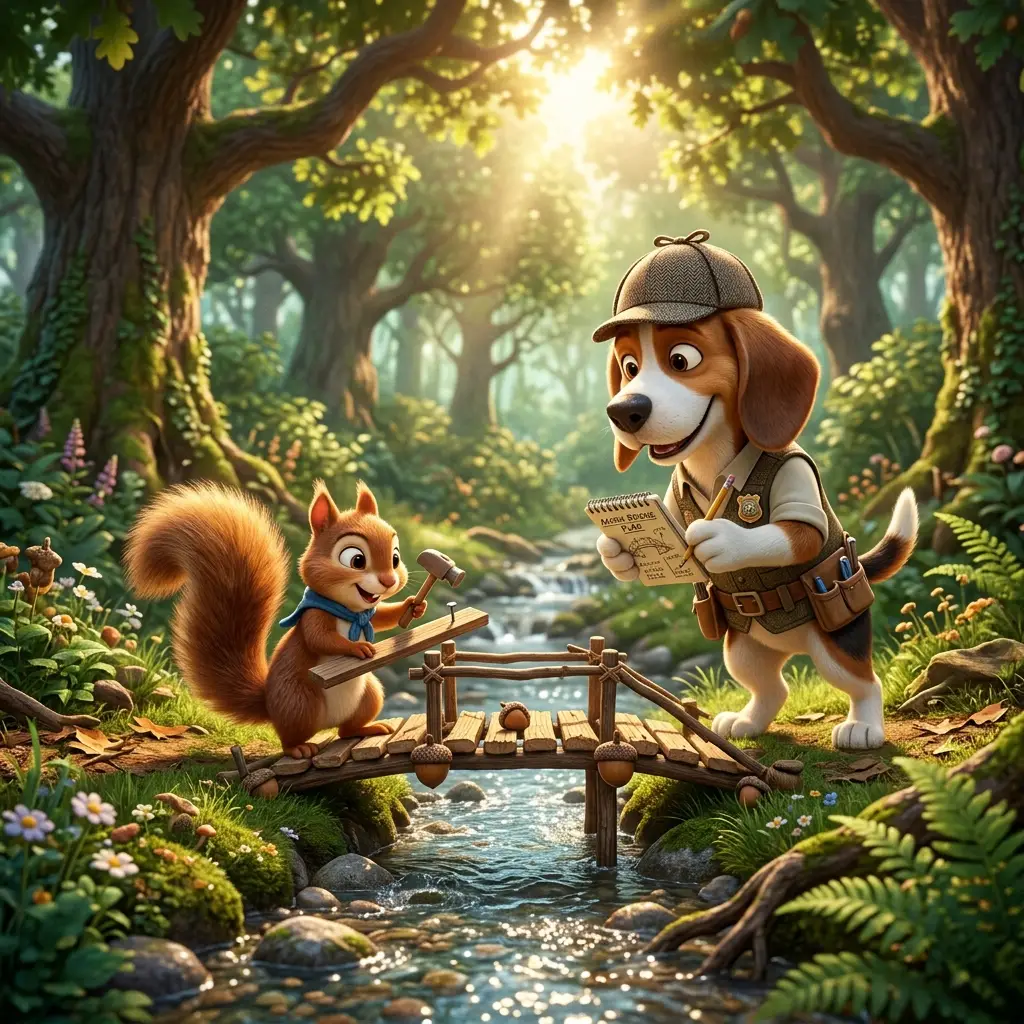
In Dukey & Dudley: And the Great Acorn Heist, the woodland animals face constant adversity throughout their investigation. Clues lead to frustrating dead ends, rat net traps cut off main forest pathways, and Ratticus's rat army appears far too powerful to overcome. Yet, Dukey the Beagle consistently reminds his fellow woodland defenders that every minor setback is simply a puzzle piece waiting to be turned around.
The Psychology of the Growth Mindset
Stanford psychologist Dr. Carol Dweck revolutionized educational theory with her ground-breaking research on the "Growth Mindset." A child operating under a fixed mindset believes that intelligence and talent are static, unchangeable traits—if they fail at a task on their first attempt, they assume they "just aren't smart enough" and withdraw effort to protect their self-esteem.
Conversely, a child equipped with a growth mindset understands that intelligence is like a physical muscle that grows stronger and more resilient through effort, trial, and strategic error. When children realize that mistakes are not evidence of personal failure but rather essential neurobiological stepping stones, their relationship with daily frustration changes completely. Instead of feeling ashamed or defeated when they hit a roadblock, they become curious detectives eager to test new hypotheses and try different approaches.
🌟 The Growth Mindset Shift:
❌ Fixed Mindset Language:
"I'm just terrible at reading."
"This puzzle is way too hard for me."
"I made a mistake, so I am a failure."
Result: Frustration, avoidance, and loss of confidence.
✅ Growth Mindset Language:
"I haven't mastered this word YET."
"This puzzle requires a different strategy."
"My brain is growing new connections right now!"
Result: Curiosity, perseverance, and long-term grit.
How Storytelling Builds Emotional Grit
Children absorb emotional regulation and resilience far more effectively through engaging narrative role models than through direct adult lectures. When kids read about Dukey, Dudley, and Brin encountering a collapsed tunnel or a blocked path, they experience the initial disappointment right alongside the book characters. But when they see Dukey step back, take a deep calming breath, and say, "Let's look at this problem from another angle," young readers absorb that exact coping mechanism for their own lives.
In chapter four of The Great Acorn Heist, the young squirrel squad gets discouraged when their first acorn gatherer craft collapses on the forest floor. Dukey doesn't step in and rebuild it for them; instead, he asks guided, encouraging questions that help them discover how to reinforce the wooden beams themselves. This empowers the young animals with genuine pride, agency, and self-efficacy.
Five Daily Parent Strategies for Fostering Resilience
📋 Practical Roadmap for Parents and Educators:
- Praise Process and Strategy Over Trait Intelligence: Replace generic praise like "You're so smart!" with specific effort feedback: "I am so proud of how hard you concentrated and tried three different strategies to solve that hard problem."
- Normalize Daily Adult Mistakes Openly: Share your own minor mistakes openly over family dinners. Say, "I burnt the vegetables tonight because I forgot to set a kitchen timer! Next time, I'll set the alarm on my phone right away."
- Implement the Power of the Word "YET": Whenever your child says "I can't do this," gently add the word "YET" to the end of their sentence to remind them that learning takes time.
- Break Intimidating Goals into Mini-Quests: If homework or reading a long chapter feels overwhelming, help your child break the goal down into bite-sized 5-minute missions with quick stretch breaks.
- Validate Frustration Before Offering Solutions: Acknowledge their feelings first: "I see how frustrating it is when those building blocks won't balance. Take a breath, and when you're ready, let's look at the base together."
Building Long-Term Confidence Through Challenges
Confidence is not built by avoiding difficulty; it is forged by overcoming hard challenges through sustained effort. When parents cushion children from every minor failure or step in to solve every problem immediately, kids internalize the message that they are incapable of managing discomfort independently.
By creating an environment where effort is celebrated, mistakes are treated as fascinating data points, and challenges are framed as exciting quests, we equip children with the ultimate emotional armor. They grow into curious, adaptable, and confident learners who face life's uncertainties with courage and optimism.
The Role of Play and Low-Stakes Challenges
Providing children with low-stakes, joyful environments to practice resilience helps build confidence that carries directly over into academic and social life. Games, puzzles, and creative crafts allow kids to experience minor failures in a safe space where the consequences are light and the fun is high.
Your child can practice focus, pattern recognition, and determination in our match-3 puzzle game Oak Bark Park Krunch, express their artistic creativity in our Detective Coloring Book, or join Brin's team on the Woodland Guardianship Map!
Explore More Woodland Adventures!
Join Dukey & Dudley on their quest, test your skills in the games room, or print mystery activity packs!