
2026-09-14 • BY D.T. Risenburg
Autumn Detectives: Turning Crisp Fall Walks into Mind-Fueling STEM Mysteries and Reading Sparks
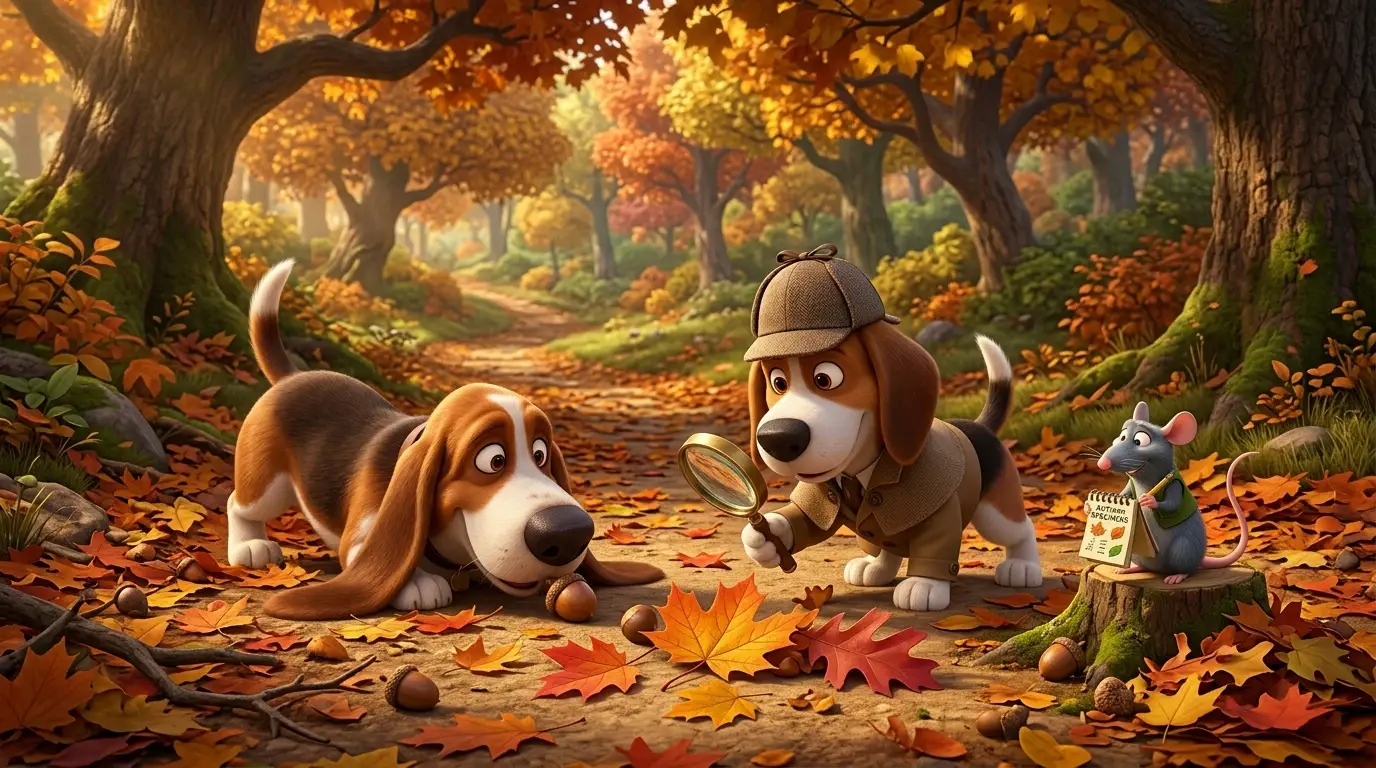
Grab your detective magnifying glass! Autumn in Oak Bark Park is the most magical season of the year. The trees are turning gold, squirrels are running obstacle courses, and hidden clues are everywhere! 🍁🔍🐾

Dukey's 5-Item Fall Nature Scavenger Hunt
On your next walk through your neighborhood or park, see if you can find all 5 secret clues:
- A pointed oak leaf that is deep crimson red 🍁
- A fallen acorn with its tiny "hat" still attached 🌰
- A squirrel burying food in the grass or a tree notch 🐿️
- A pinecone that opens when dry and closes when wet 🌲
- A flock of migrating birds flying in a "V" shape in the sky 🦆
🔬 Nibbsley's Secret Leaf Color Science:
Did you know leaves don't actually turn orange or yellow in autumn? They were already yellow all along!
During summer, trees make green chlorophyll food so fast that the green masks every other color like a thick coat of green paint. When autumn days get shorter and colder, the tree rests, the green fades away, and the hidden sunshine colors underneath are finally revealed! How cool is that?

Dudley's Cozy Mystery Story Time
After a brisk walk crunching through the leaves, there is nothing better than kicking off your shoes, wrapping up in a warm fuzzy blanket, and opening a great mystery book. Dive into The Great Acorn Heist and help Dukey and Dudley solve the biggest forest mystery of the century!
Taste the Flavors of Autumn! 🍂
Check out our brand-new Woodland Autumn Harvest Pumpkin Crunch Parfait and Apple Pie Oats in Dukey's School Lunch Kitchen!
Explore Autumn Kitchen Recipes! 🍎There is a reason autumn has captivated poets, scientists, and storytellers for centuries. As amber leaves drift from oak canopies, squirrels sprint across lawns with cheeks bulging with acorns, and crisp morning breezes replace summer humidity, the world transforms into an open-air laboratory. For school-aged children, this seasonal shift offers an extraordinary opportunity to ignite a passion for STEM inquiry and reluctant-reader literacy.
Too often, academic learning is perceived as something confined strictly to classroom desks, computer screens, and standardized worksheets. Yet the greatest scientists and mystery detectives throughout history began with a simple habit: stepping outside and noticing what changed. In Dukey & Dudley: And the Great Acorn Heist, the entire mystery of the missing forest harvest unfolds through keen observation of woodland biology, animal foraging habits, and simple mechanical principles. Here is how parents and teachers can turn simple autumn walks into mind-expanding detective expeditions that inspire curious minds and enthusiastic readers.
The "Pocket Magnifying Glass" Habit
"You don't need a high-tech laboratory to be a scientist; you just need to look closer!" says Detective Dukey. Tuck an inexpensive pocket magnifying glass into your child's backpack or coat pocket on the afternoon walk home from school. Pausing for just three minutes to inspect the branching veins of a fallen oak leaf or the textured cap of a dropped acorn turns passive transit into active scientific discovery.
1. The Secret Science of Autumn: Questions That Spark Wonder
Instead of simply telling children facts, ask open-ended questions that provoke hypothesis testing and critical thinking:
- Why Do Leaves Change Color? (The Masking Chemistry): Most kids think leaves "turn" red or yellow. Explain Nibbsley's favorite plant science secret: the yellow and orange colors (carotenoids) were inside the leaf all summer long! The bright green chlorophyll pigment was just so loud that it hid them. When cold weather arrives, chlorophyll breaks down, revealing the leaf's true hidden colors.
- Why Do Oaks Drop Thousands of Acorns Some Years? ("Mast Seeding"): Some autumns, the ground is covered in a carpet of acorns, while other years there are barely any. Explain the evolutionary mystery of "mast years"—how oak trees coordinate across entire regions to produce huge crops that overwhelm seed-eaters like mice and squirrels, ensuring some acorns survive to become mighty trees.
- Where Do Animals Put Their Stashes? (Scatter vs. Larder Hoarding): Challenge your child to observe a neighborhood squirrel or chipmunk for 5 minutes. Are they burying one nut at a time in the grass (scatter-hoarding, like squirrels) or stuffing multiple nuts into a single hollow log (larder-hoarding, like chipmunks)?
Simple Leaf Pressing & Blueprinting
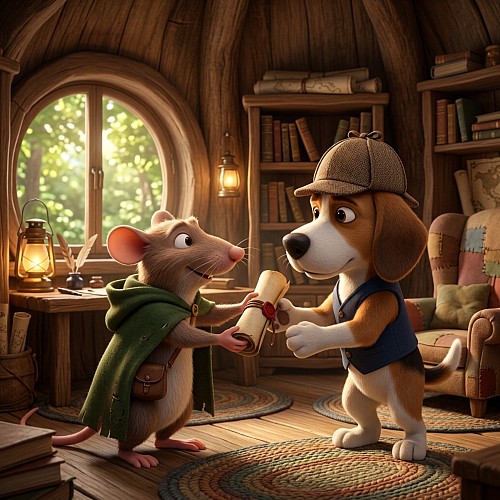
Turn outdoor specimens into kitchen STEM projects! Place colorful autumn leaves between wax paper under a heavy dictionary for 48 hours to create preserved specimens. Have your child use a white crayon to create leaf vein rubbings, labeling the stem (petiole), main vein (midrib), and lateral veins like a true botanical blueprint.
2. Bridging Outdoor Curiosity to Reading Confidence
Reluctant readers often struggle when assigned dry, disconnected texts. When reading is tethered to something they physically observed outside, their intrinsic motivation skyrockets:
📚 3 Ways to Bridge Autumn Curiosity to Literacy:
- The "Field Investigator's Logbook": Give your child a blank unlined journal. After a walk, let them paste in a dried leaf, draw a diagram of a bird they heard, and write two "Field Notes" sentences. This removes the pressure of formal essays while developing vital descriptive writing skills.
- Pair Mystery Fiction with Nature Facts: Introduce mystery-adventure books with animal sleuths, like Dukey & Dudley. When children see fictional characters using actual forest biology to crack cases, they view reading as a fun game rather than a chore.
- Audiobooks and Read-Alouds Under Blankets: As evenings grow colder, pair a cozy blanket and a cup of warm apple cider with a captivating chapter book read-aloud. Shared family reading models expressiveness and builds vocabulary effortlessly.
The Cozy Fall Reading Habit
Dudley loves sniffing out tracks in the cool morning air, but his favorite part of autumn is curling up on the rug beside a warm heater with a great book! Create a special "Fall Reading Nook" with a soft flannel throw and a stack of mystery books. When reading is paired with cozy warmth and tasty treats, kids fall in love with books for life.
Pack an Autumn Harvest Lunch for Your Nature Walk
Fuel your family's outdoor adventures with fall harvest flavors! Explore our seasonal recipes in Dukey's Nutritious and Delicious School Lunch Kitchen, including our new Woodland Autumn Harvest Pumpkin Crunch Parfait and Apple Pie Oats!
Explore More Woodland Adventures!
Join Dukey & Dudley on their quest, test your skills in the games room, or print mystery activity packs!