
2026-08-25 • BY D.T. Risenburg
The Art of Observation: How Dukey Reads Dog & Wildlife Body Language (And How Kids Can Too!)
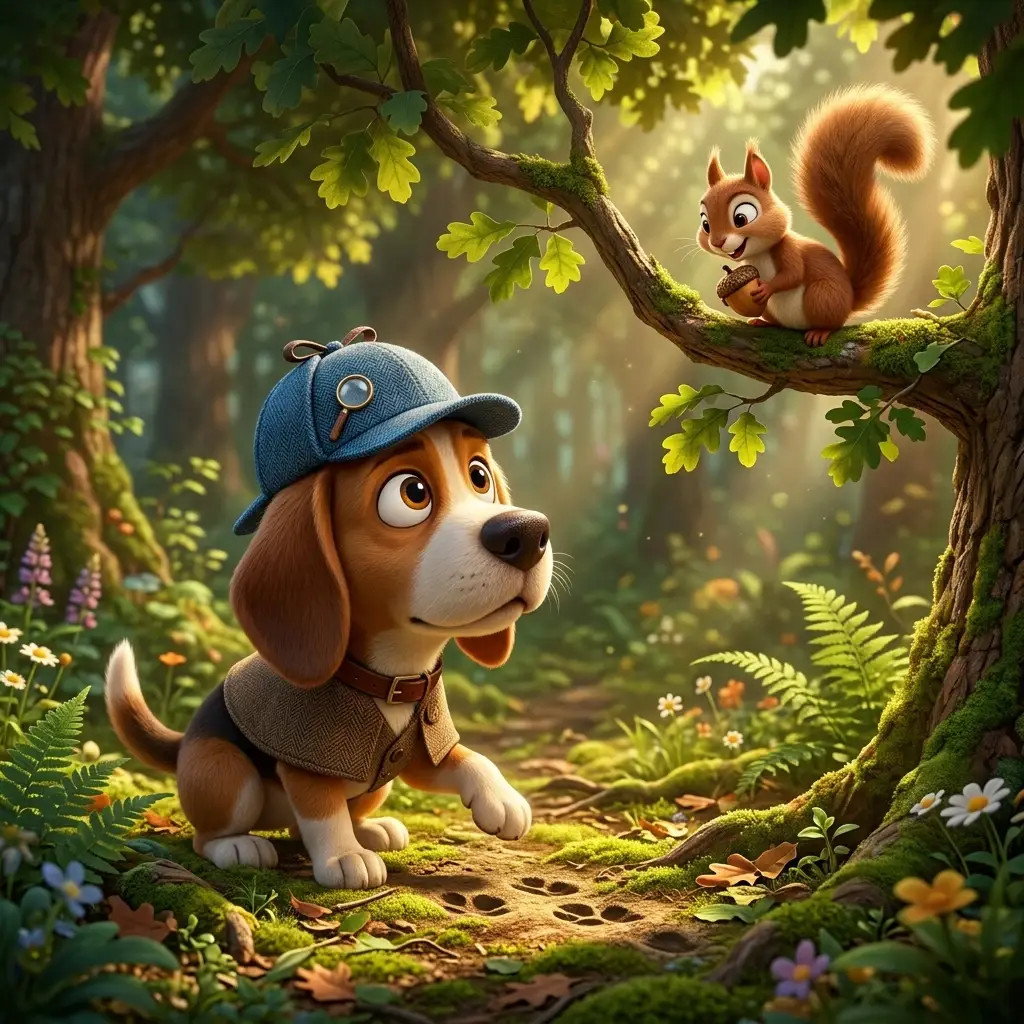
In detective work, the most critical clues are rarely written on signs—they are observed in subtle movements, micro-expressions, and shifts in behavior. In Dukey & Dudley: And the Great Acorn Heist, Detective Dukey relies on his sharp powers of observation to read the body language of every suspect in Oak Bark Park. Whether he is noting the guilty twitch of Ratticus’s whiskers or reading the relaxed tail position of a friendly woodland witness, Dukey’s keen eyes prove that non-verbal signals reveal the truth.
For children and parents, learning to read animal body language is not only a fascinating science lesson—it is a essential real-world life skill. Understanding how dogs, cats, and wild animals communicate through posture, ear angles, tail movements, and eye contact builds deep empathy, enhances emotional intelligence, and significantly reduces the risk of accidental pet bites or animal stress.
Decoding the Canine Silent Language
Many adults and children assume that a wagging tail always means a dog is happy. However, professional animal behavioral experts know that a tail wag simply signals emotional arousal. The key to reading a dog’s mood lies in analyzing the entire body posture simultaneously.
🐕 How to Read a Dog's Emotional Signals:
- Happy & Relaxed (Like Dudley enjoying a treat): Loose, wiggly body stance, soft "happy eyes," ears held in a neutral position, and a broad, sweeping tail wag that moves the entire hindquarters.
- Alert & Investigating (Like Dukey at a clue site): Weight shifted slightly forward on all four paws, ears forward and prickled, tail held horizontal or elevated with steady, deliberate wags.
- Anxious or Fearful (Like a nervous pup): Body lowered or crouched toward the ground, tail tucked between hind legs, ears pinned backward against the skull, avoiding direct eye contact or showing "whale eye" (visible white of the eyes).
- "Back Off" Warning Signals: Stiffened posture, raised hackles (fur along the spine standing up), hard direct stare, tight closed mouth, or subtle lip curls.
Wildlife Signals in Your Backyard
Forest animals like squirrels, chipmunks, raccoons, and birds also possess rich non-verbal communication systems. In The Great Acorn Heist, Brin the raccoon uses subtle tail flicks and ear twitches to signal hidden danger across the treetop canopy.
When squirrels feel threatened, they rapid-fire flick their bushy tails like a flag and emit sharp "chittering" alarm calls to warn neighbor squirrels. Raccoons raise their shoulder fur to appear larger when startled, while songbirds freeze completely in place when a hawk drifts overhead. Teaching kids to spot these wild signals transforms ordinary backyard birdwatching into an interactive wildlife mystery!
5 Steps to Build Observation Skills in Kids
Active observation is a foundational skill in both STEM education and reading comprehension. Children who practice observing subtle details in nature develop stronger focus, improved critical thinking, and higher empathy toward others.
🔍 5 Fun Family Observation Activities:
- The Freeze-Frame Game: While watching a video of family pets or wildlife, pause the video for 5 seconds and ask your child to describe what the animal's ears, eyes, and tail are saying.
- Ask First, Pet Second: Teach children the golden safety rule: Always ask the owner first, then let the dog sniff the back of your closed hand while observing if the dog approaches willingly with a wiggly stance.
- Nature Sketch Journaling: Encourage your child to bring a small notebook on park walks to sketch animal postures and track signals like bird wing flaps or squirrel tail twitches.
- Emotion Charades: Play a fun family game where kids act out animal feelings (excited, sleepy, curious, startled) using only posture and hand movements without making a sound!
- Detective Field Notes: Create a "Backyard Detective Field Book" where kids log daily observations of local pets and backyard wildlife.
Explore More Oak Bark Park Adventures
Practicing sharp observation is just one way to become a true park defender. Continue your journey across Oak Bark Park by testing your detective eyes in our Oak Bark Park Word Search, baking homemade snacks with Chef Dudley in Dudley's Bakery, or playing Oak Bark Park Krunch!
Explore More Woodland Adventures!
Join Dukey & Dudley on their quest, test your skills in the games room, or print mystery activity packs!